


Battery Run
4.4530.00 Reviews
App Specs
- Version
- 8.5
- Updated On
- License
- Free
- Downloads
- 10,000,000+
- Developer
- VOODOO
- Categories
- Action
- Platform
- Android
Screenshots
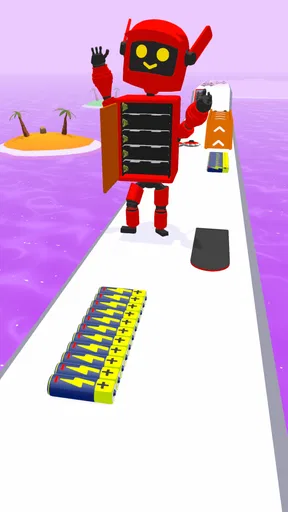

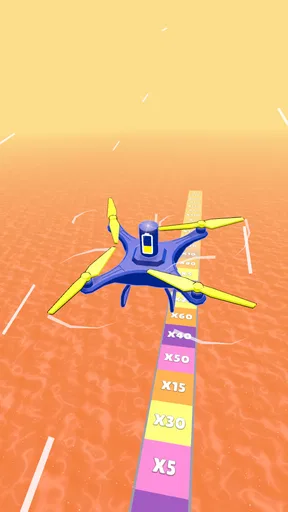

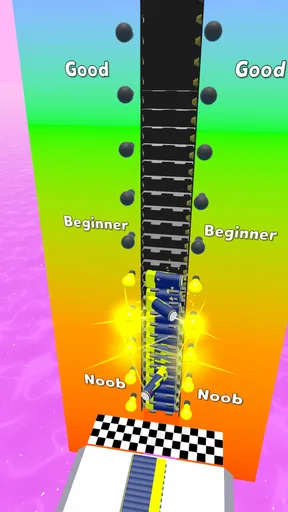
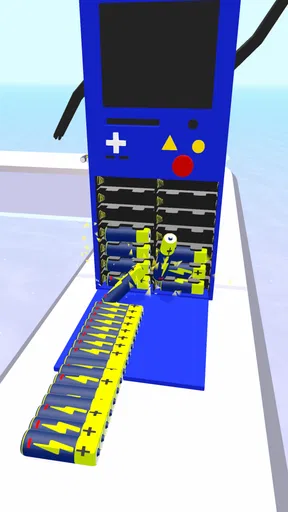

 Analysis by AppCompare
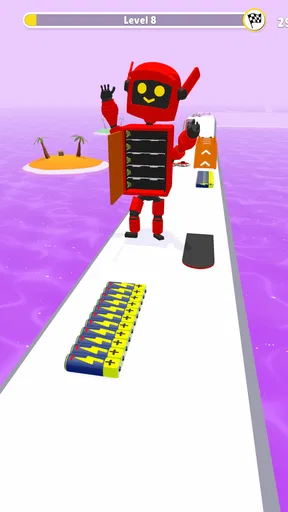
I found Battery Run most enjoyable when I treated it as a quick reflex game rather than a serious long-term challenge. Its idea is immediately clear: guide a moving line through a course, collect batteries, and try to finish with as much energy as possible. That simplicity is the main attraction. I can open it for a short break, understand the objective without a tutorial-heavy introduction, and start playing almost instantly.
At the same time, the uncomplicated design explains its limits. This is an action game built around repetition, timing, and short bursts of attention. It does not aim to replace a deep campaign, a competitive multiplayer title, or a strategy game with layers of planning. My overall view is positive, but specific: I would recommend it to anyone who likes accessible arcade-style runs and quick mobile sessions, while players looking for substantial progression should choose something more demanding.
How Battery Run feels in everyday play
The central task is easy to grasp. I steer the character along the route and focus on collecting batteries while avoiding the parts of the course that can reduce the result. The visual goal is simple enough that I never felt lost, even when I returned after a few days away. That makes the game especially suitable for casual players who do not want to memorize complicated controls or learn a large set of rules.
What makes each attempt work is the tension between collecting more and staying safe. The most obvious path is not always the best one if it forces a risky movement. I found myself making small decisions rather than simply holding a direction: should I take the nearby battery, move toward a larger group, or preserve a clean route to the finish? Those choices are basic, but they give the short levels a reason to replay them.
The controls are best approached with light, deliberate movements. Overcorrecting is the easiest way to turn a promising run into a poor one. My practical advice is to watch the next section of the course instead of reacting only to what is directly in front of the character. That small change makes the game feel less frantic and helps me line up collections without making unnecessary swerves.
A useful habit is to separate the run into two priorities. Early on, I look for a safe rhythm and learn how the route is arranged. Near the end, I become more conservative, because chasing one last battery can undermine the progress already made. This is not a complicated technique, but it gives the game more texture than the short store summary suggests.
It also works well in ordinary situations where I have only a few minutes. I can imagine playing it while waiting for a friend, during a short commute, or between tasks when I want something interactive but not mentally exhausting. A single attempt gives me a complete activity, unlike games that require a long uninterrupted session before anything meaningful happens.
Worth Reading Before You Choose

EA SPORTS FC Mobile 26 Is a Bigger Football Game, but It Takes Time

Flipboard Shows What News Apps Must Do Beyond the Feed

Switching to Android Auto Means Rethinking Your Driving Routine

Google Calendar Makes a Crowded Week Easier to Manage

Ludo King Makes the Most of the Minutes Between Plans

Baby Panda World Brings Quick Play to Modern Phones, but Its Game Library Feels Busy
The strongest part is its immediate readability
Battery Run benefits from a clean premise. The batteries are not just a decorative theme; they give every movement a visible purpose. I always know what I am trying to gather, and the course itself provides the challenge. That clarity is valuable on a phone, where a player may be distracted, using one hand, or returning to the game after a long pause.
I also like that the game does not demand specialist knowledge. Someone who rarely plays mobile action games can understand the objective within moments. The Everyone content rating reflects that broad accessibility, and I would comfortably suggest it to younger players or to relatives who prefer very straightforward games. The main requirement is attention, not experience with a particular genre.
The developer, VOODOO, has made a game that fits the familiar pick-up-and-play tradition of mobile arcades. Its audience reach is substantial: it has passed ten million installs and holds a 4.4 average from roughly twenty-four thousand ratings. Those figures do not prove that every player will enjoy it, but they match my impression that the concept is easy to approach and has wide casual appeal.
Another strength is the way the battery objective creates a natural risk-and-reward decision without explaining it through long text. I can understand the trade-off by playing. If I take a safer route, I may finish with less collected. If I move aggressively, I may expose the run to a mistake. That kind of visual feedback is more effective here than a complicated upgrade screen would have been.
For new players, I recommend spending the first few attempts learning movement rather than trying to maximize every collection. The game becomes more satisfying once steering feels predictable. After that, I start looking at the course as a sequence of small choices: position early, make one clean adjustment, then prepare for the next section. This approach is more reliable than making several hurried corrections at the last moment.
Where the repetition starts to show
The same accessible structure that makes the game welcoming can also make it feel limited. Once I understand the basic rhythm, the challenge depends heavily on whether I still enjoy repeating short collection runs. Players who need a strong narrative, varied character abilities, or a large strategic system may find the experience too narrow.
The game is also not the right choice when I want a calm activity with no pressure. Although the rules are simple, the action still asks me to watch the route and react quickly. Someone looking for a puzzle that rewards extended thought, a narrative adventure, or a relaxing simulation would probably be better served elsewhere. Battery Run is casual in presentation, but it is still an action game at heart.
My main friction point is the possibility of chasing completion too aggressively. The battery theme encourages collecting everything, yet the safer decision is sometimes to accept a smaller haul. That can feel unsatisfying if I am the kind of player who wants a perfect run every time. I had more fun when I treated each attempt as a quick improvement exercise instead of demanding flawless performance.
There is also a difference between short-term replay value and deep progression. The game can keep me occupied through repeated attempts because I want to improve my route choices, but that motivation comes from the run itself. It is not the same as discovering a new story chapter, building a complex loadout, or competing in a detailed ranked system. Readers should choose it with that distinction in mind.
Because the game is free, it is easy to try without making a financial commitment. That lowers the barrier for casual players, but it does not change the basic trade-off: free access is most valuable when the core loop already matches your taste. I would not install it expecting a large content-heavy package. I would install it expecting a compact action experience centered on collecting batteries.
Small techniques that improve a run
My first concrete tip is to look beyond the nearest battery. The closest item is often tempting, but moving toward it without considering the next turn can leave the character badly positioned. I get better results by checking the next visible group and choosing a line that keeps future movement simple. This is particularly helpful when several collection options appear close together.
Second, I avoid making a correction just because the character is not perfectly centered. A small deviation is often harmless, while a sudden large movement can create a new problem. I try to make one measured adjustment, observe the result, and then prepare for the next obstacle. That method feels slower, but it produces more consistent attempts.
Third, I use the final part of a run as a test of discipline. If I already have a strong collection, I ask whether an extra battery is worth the risk. This is a useful mindset for players who repeatedly lose good attempts near the finish. The goal is not always to collect the maximum possible amount; sometimes the better achievement is completing a clean run.
A fourth insight is that the game suits different attention levels better than it may first appear. When I am tired, I play conservatively and focus on finishing. When I have more concentration, I attempt tighter routes and aim for a better collection. The same basic game therefore supports both low-effort sessions and more focused personal challenges, although neither mode becomes a deep strategy experience.
For a child, the straightforward objective can make the game easy to share with a parent or older sibling. For an adult, it works better as a break than as a primary gaming destination. I would not recommend handing it to someone who dislikes repeated arcade attempts, but I would suggest it to someone who enjoys improving through small, immediate corrections.
Who should install it, and who should skip it
I think Battery Run is a good fit for players who want an uncomplicated action game with a clear collection goal. It is especially suitable for short sessions, first-time mobile gamers, and anyone who enjoys testing hand-eye coordination without learning a complex control scheme. Its Everyone rating also makes it a broadly approachable option for families, provided the player enjoys quick movement-based challenges.
I would be more cautious about recommending it to players who measure value by content depth. If you normally choose role-playing games for character development, racing games for detailed vehicle control, or puzzle games for layered problem-solving, this may feel too light. A more substantial alternative in those categories would be better when you want long-term variety rather than a repeatable arcade loop.
It is also worth skipping if you dislike games where the main reward comes from improving your own execution. The appeal here is personal refinement: making a cleaner movement, collecting more batteries, and avoiding the mistake that ended the previous run. That can be satisfying, but only if repeating a familiar objective feels enjoyable rather than monotonous.
The technical entry point is friendly for many older devices because the minimum requirement is Android 8.0. The current version is 8.5, and the game has been available since October 19, 2021. I see those details as practical rather than decisive: the important question remains whether the simple run-based format fits your habits. If it does, the low barrier helps; if it does not, a newer or more elaborate game will not necessarily solve the underlying mismatch.
My final recommendation
After spending time with it, I see Battery Run as a focused casual game that succeeds by refusing to make its central idea complicated. Collecting batteries gives each run an immediate objective, while steering creates enough risk to make repeated attempts worthwhile. I appreciate that I can understand it quickly and still find small improvements in route choice and timing.
Its weakness is equally clear. The experience can become repetitive for anyone who needs major changes between sessions. The game does not replace a full action adventure or a deep competitive title, and I would not recommend it on the assumption that a simple premise will eventually unfold into something much larger. Its value comes from the compact loop it already offers.
For me, the best way to use it is as a dependable five-minute distraction: start a run, focus on the next safe collection, and stop when the session no longer feels fresh. The free price makes that experiment easy, and the broad audience reflected by its rating and install history suggests that the format has connected with many casual players. Still, popularity should not obscure the genre fit.
My verdict is favorable with a clear qualification: install it if you want quick, readable mobile action built around collecting batteries and improving your own control. Skip it if you are searching for story, deep progression, or constant mechanical variety. In the right role, it is an enjoyable little time-filler; outside that role, its simplicity becomes its biggest limitation.
VOODOO has kept the focus narrow, and I think that is both the reason to try it and the reason to set expectations carefully. I would recommend it to a friend who wants an accessible arcade challenge for spare moments, especially someone who likes making one more attempt after a near miss. I would not present it as an all-purpose mobile game, but as a concise experience that knows exactly what it wants the player to do.
Pros
- Simple controls make it easy to start playing immediately.
- Short levels are well suited to quick gaming sessions.
- Collecting batteries creates a clear and satisfying goal.
- Bright visuals and playful animations appeal to casual players.
- The game offers an entertaining way to pass time without complex rules.
Cons
- Repeated level patterns can make the gameplay feel predictable.
- Frequent ads may interrupt the experience
- especially between levels.
- Progress can feel dependent on collecting enough resources each run.
- The game may become less challenging for experienced players over time.
- Some devices may experience performance issues during busy scenes.
FAQs for Battery Run
What is Battery Run, and how do you play it?
Battery Run is a casual arcade game in which you control a battery moving along a track and collect additional batteries while avoiding obstacles. The goal is to reach the finish line with as much energy as possible. Controls are generally simple, relying on swiping or dragging to move from side to side, making the game easy to understand but progressively more challenging.
Is Battery Run free to download and play?
Battery Run is generally available as a free-to-download mobile game, allowing you to access its core levels without paying upfront. However, the experience may include advertisements, optional in-app purchases, or both. Before downloading, it is worth checking the store listing for the current pricing details, supported devices, and whether purchases are used to remove ads or unlock additional features.
Does Battery Run require an internet connection?
The basic gameplay in Battery Run can usually be enjoyed without a constant internet connection, which makes it suitable for short sessions while traveling or when mobile data is unavailable. Nevertheless, an internet connection may be required for advertisements, online services, updates, analytics, or restoring purchases. Some versions may also behave differently depending on the platform and installed release.
Is Battery Run appropriate for children?
Battery Run uses simple controls, colorful visuals, and straightforward arcade mechanics, so it can be accessible to younger players. Parents should still review the age rating and privacy information shown on Google Play or the App Store, particularly because advertisements and optional purchases may be present. If children use the game, enabling device-level purchase restrictions is a sensible precaution.
What are the main advantages and disadvantages of Battery Run?
The main strengths of Battery Run are its easy-to-learn controls, quick levels, bright presentation, and satisfying collection-based gameplay. It works well for casual players who want short, uncomplicated sessions. On the other hand, the mechanics can become repetitive over time, and advertisements may interrupt the experience depending on the version. Progression and replay value may also feel limited for experienced arcade players.


